Multimodal operando solid oxide cell
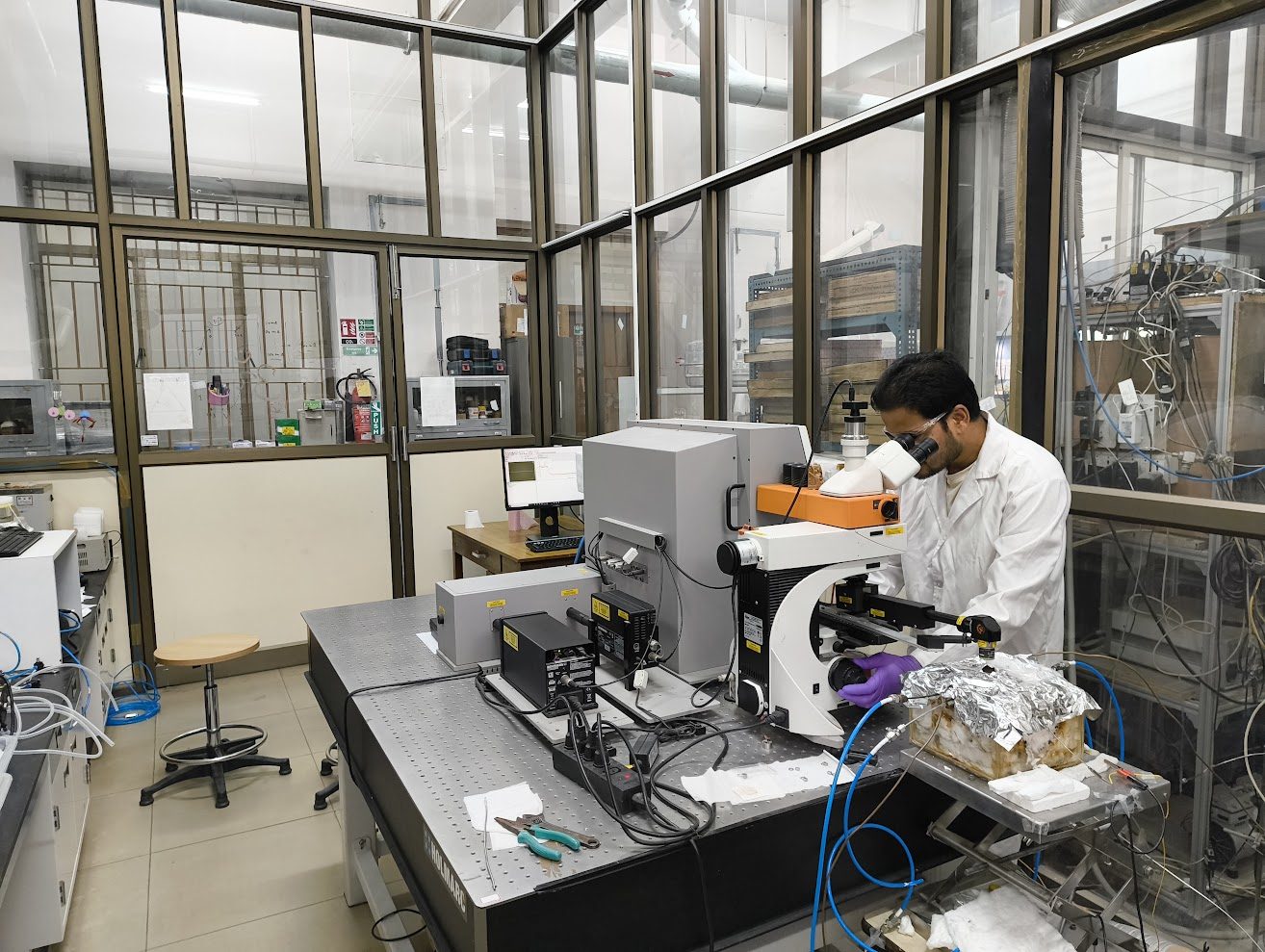
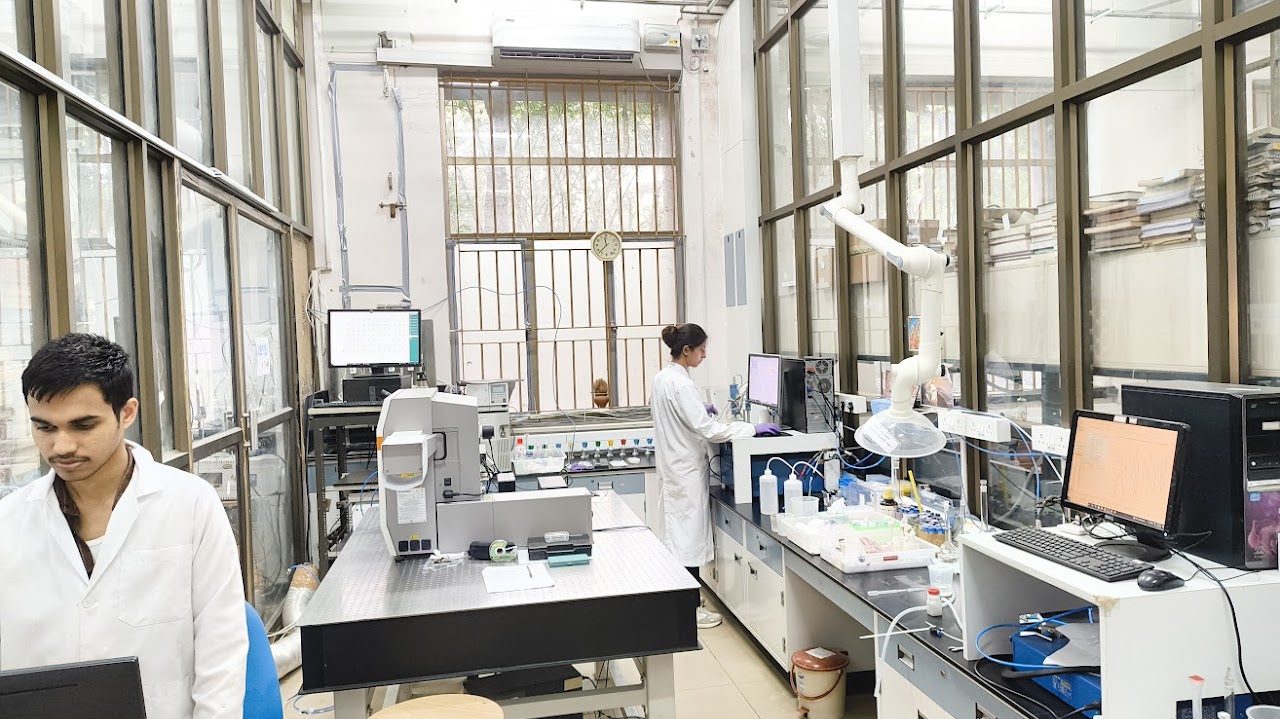
Designed and built in the lab. A two-chamber cell that combines high-temperature electrochemistry (two- or three-electrode) with Raman spectroscopy, optical imaging, impedance and online mass spectrometry at 800 °C, and can reach 1000 °C.
Electrolyser test station
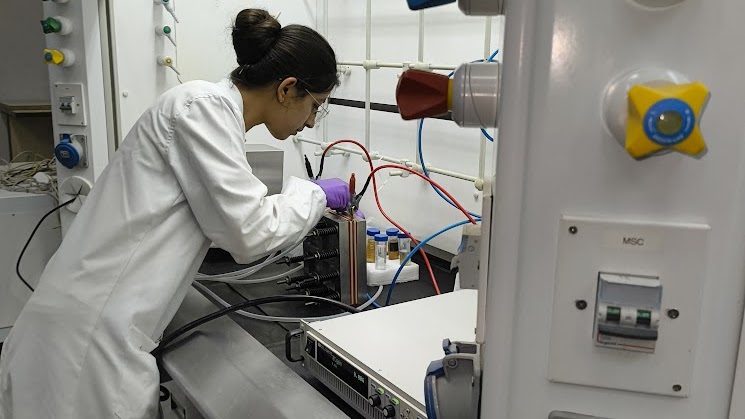
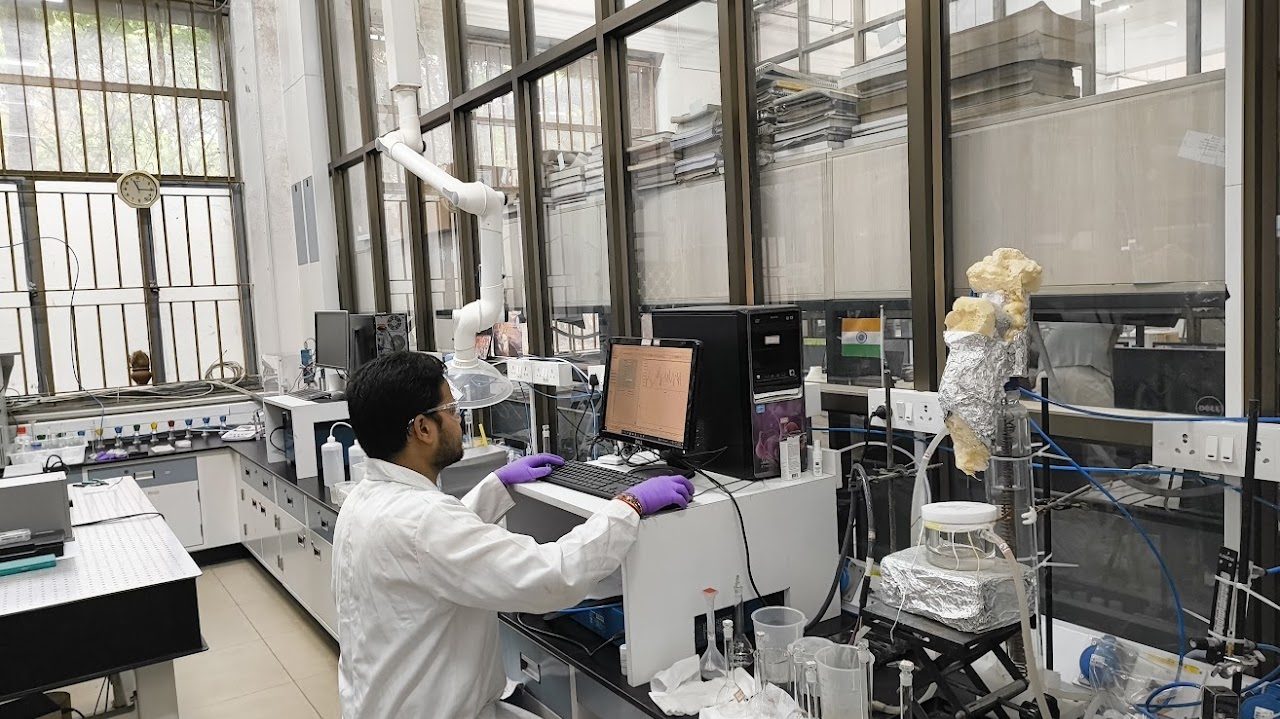
kW-scale test station with our own current collectors, end plates and flow and thermal management, for 2 × 2 cm² and 10 × 10 cm² electrodes (a TRL 5 test bench).
SOEC/SOFC test station
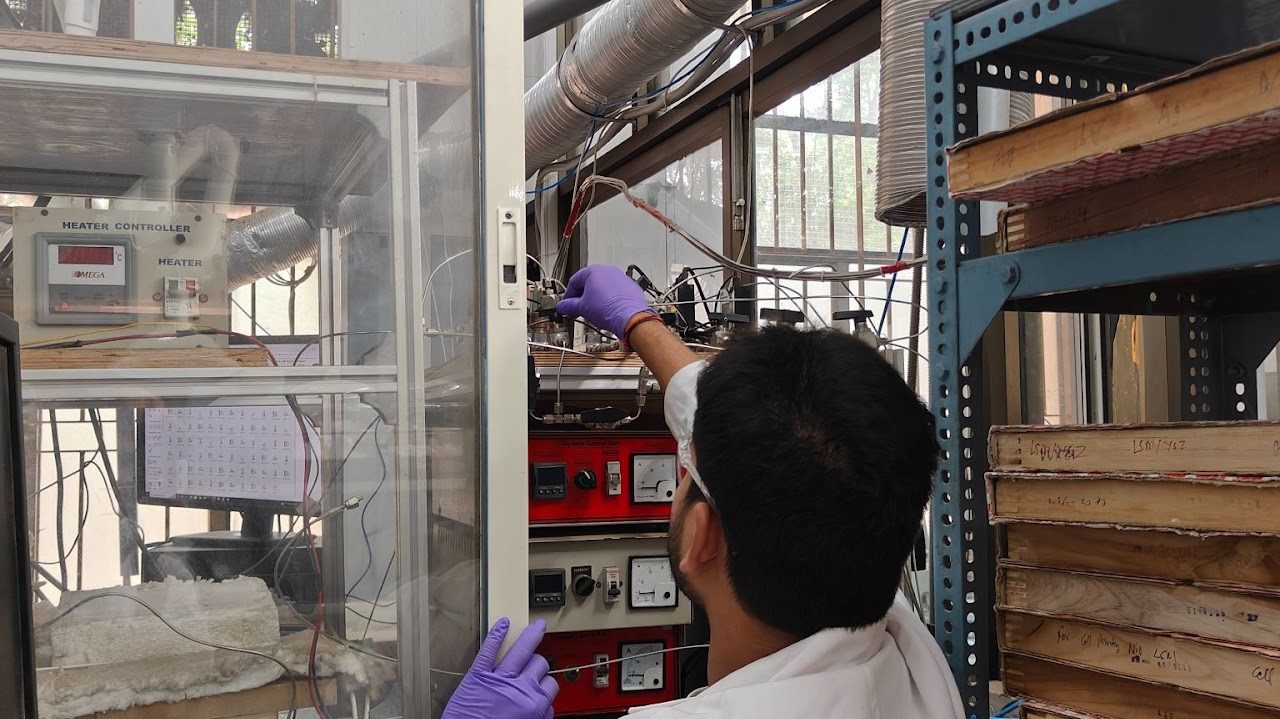
Tests button cells and membrane electrode assemblies from 500 to 800 °C with online mass spectrometry, in two- or three-electrode mode.
Gas analysis bay
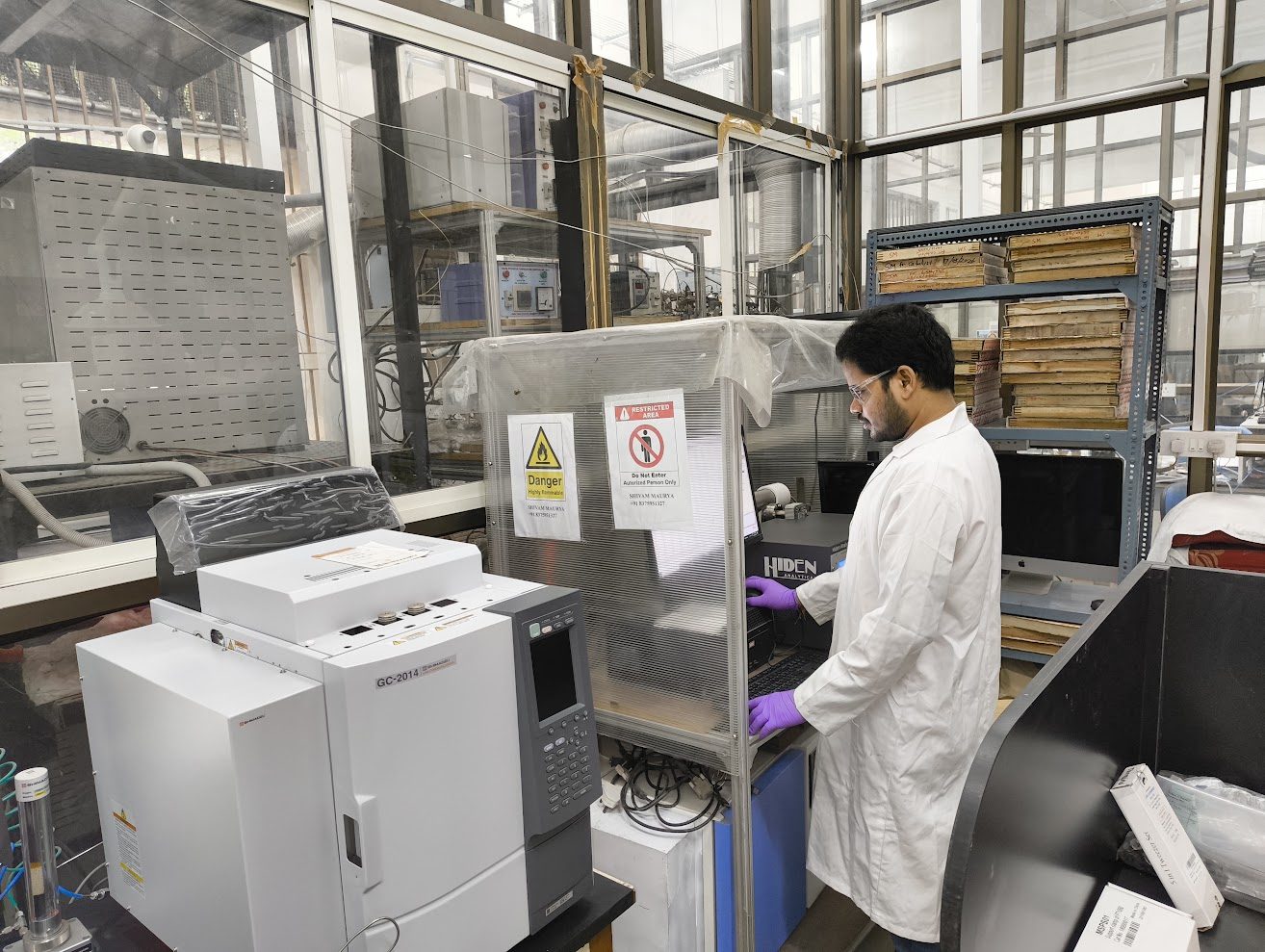
Online mass spectrometry and gas chromatography for gaseous products and transient mass dynamics.
Electrochemistry bay
Multichannel potentiostats, a high-current potentiostat with impedance to 10 MHz, and membrane testing.
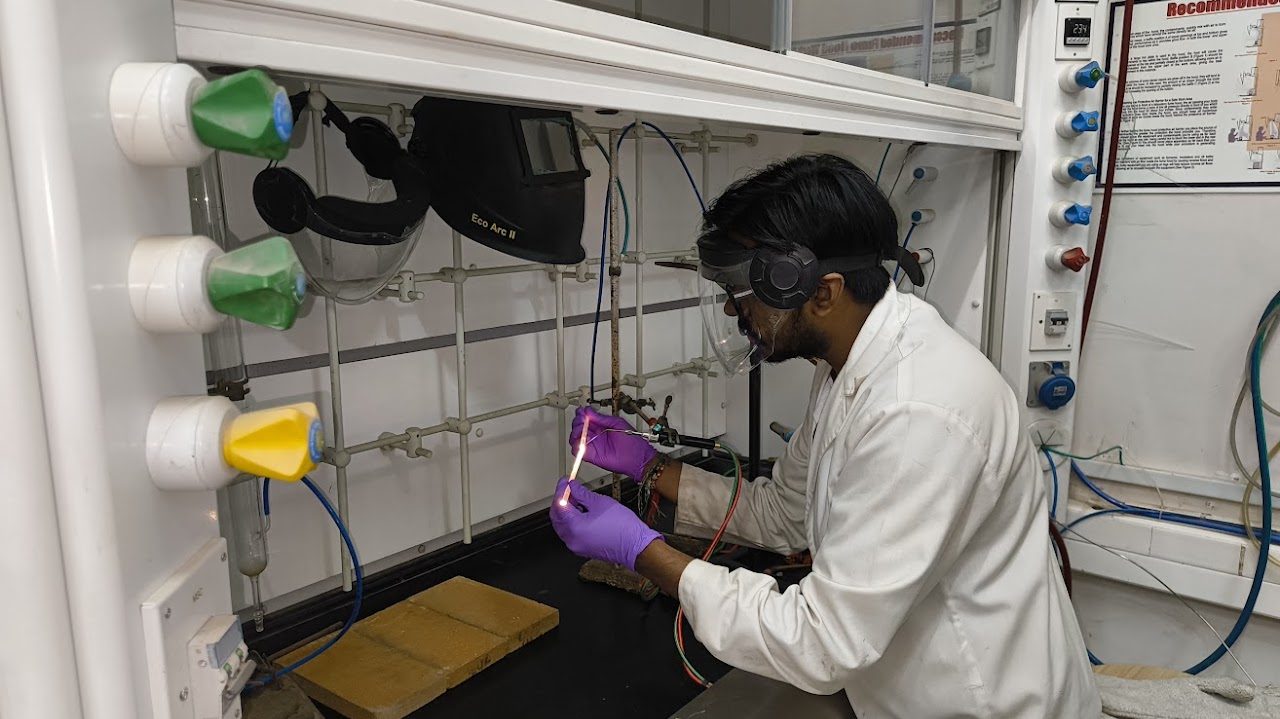
High-temperature bay
Solid-state synthesis, tube sealing, metal joining (welding), fire polishing and micro-reactor building.
In situ Raman liquid cell
Built in the lab for oxygen evolution and reduction studies. Images the active surface, locates where bubbles form and captures short-lived intermediates such as M–OOH under bias, at variable temperature.
Temperature-programmed reaction set-up
An ultrasensitive micro-reactor for TPR/TPO under controlled flow, coupled to a mass spectrometer, with a Raman-coupled version.
Membrane conductivity cell
Controlled temperature and humidity set-up for ionic conductivity of polymer membranes, coupled to a Raman spectrometer.
Membrane electrode assembly fabrication
A hot press and processes to make catalyst-coated membranes and membrane electrode assemblies, including for CO2/H2O solid oxide electrolysers.
Rotating electrode set-up
RDE and RRDE (PINE) to quantify product yields, such as H2O2 in oxygen reduction.
Atomistic modelling
First-principles calculations of reaction energies and bonding (VASP, COHP) on catalytic surfaces.